The Holy Bible

When we reflect on the Bible, many important questions naturally arise. The first and most fundamental question is: What is the Bible? Why is it important to read the Bible? How can we be sure that the Bible is truly the Word of God and a revelation from Him? Why do we often hear about the Old Testament and the New Testament? When was the Bible divided into these two sections, and what is the significance of these writings in relation to the traditions of the Christian communities? Moreover, when someone reads the Bible, what kind of attitude or mindset should they have?


Let us begin by answering the question: What is the Bible?

In the opening verses of the Letter to the Hebrews (Hebrews 1:1–4), we read: “Long ago God spoke to our ancestors in many and various ways by the prophets, but in these last days He has spoken to us by a Son, whom He appointed heir of all things, through whom He also created the worlds. He is the reflection of God’s glory and the exact imprint of God’s very being, and He sustains all things by His powerful word. When He had made purification for sins, He sat down at the right hand of the Majesty on high, having become as much superior to angels as the name He has inherited is more excellent than theirs.”


This passage offers a concise introduction to the meaning of the Bible. For Christians, the Bible is considered a sacred book—a divine revelation. Christians believe and accept that the Bible is the Word of God, spoken to humanity. As the Letter to the Hebrews mentions, God has communicated in many ways over time.


First, God has spoken through nature. When we look at the sky, the stars, the mountains, the trees, the birds in the air, the animals in the forest, or the fish in the oceans—we see the glory of God reflected in creation. Just as a massive building or a complex computer system suggests the presence of a designer, creation itself points to the existence of a Creator. Nature becomes a silent but powerful revelation of God’s presence.This is the first form of revelation—what theologians call natural revelation. But God didn’t stop there. The Bible tells us that God also communicated His message more directly by appointing certain individuals to speak on His behalf.

 These individuals are called prophets, particularly in the Old Testament. The Jewish people believed that their prophets were chosen by God to deliver His messages to them. However, even beyond the Jewish tradition, wise people—such as rishis in India, sages in China, or philosophers in Babylon, Egypt, and Mesopotamia—have sought and shared deeper truths about life, justice, and the divine. In this broader sense, God has also used human beings as instruments to share His message.

Therefore, the Bible shows us that God has revealed Himself in two main ways:

1) Through creation, which silently proclaims His glory.

2) Through people, especially the prophets, who were chosen to speak His word directly to humanity.


In both ways, God reaches out to His creation, guiding humanity through history, nature, and His chosen messengers.

Why should I read the Bible?


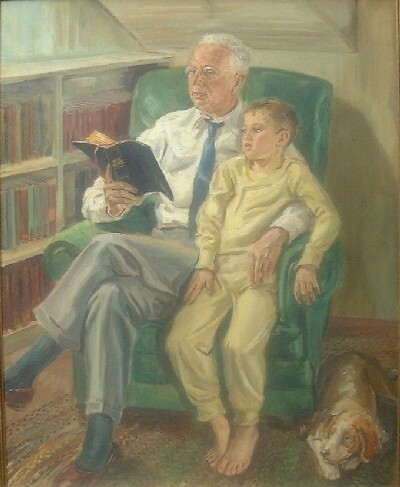
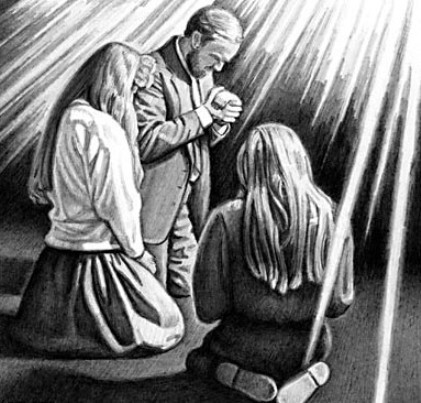
The Bible—both the Old Testament and the New Testament—together form the revealed Word of God for Christians. So, why should we read it? The simple answer lies in our belief: the Bible is God's Word. In the past, God spoke to humanity through the prophets. But in these last days, He has spoken to us directly by sending His only Son, Jesus Christ. When we read the Bible, we are not just reading history or literature—we are listening to God. Listening to God draws us closer to Him. Just as a child listens to their parents, or as spouses or close friends listen to one another out of love and trust, so too do we listen to God with hearts full of love, reverence, and faith. The act of reading the Bible is more than study—it is a loving relationship.


We listen because God is our Father, and we honour our Father’s voice.God is also like a Mother, and we cherish the comfort and wisdom of a mother's words.God is our Brother, our Sister, our Friend—and we listen with affection, respect, and desire to grow closer.Reading the Bible, then, becomes a way of deepening our relationship with God. It forms in us a heart that loves, trusts, and follows Him more closely. As St. Ignatius of Loyola beautifully prayed:


“That I may know Him more clearly,

that I may love Him more dearly,

and that I may follow Him more nearly.”


In essence, we read the Bible to know God, to love God, and to walk with God in our daily lives.


How Do We Know That the Bible Is God’s Revelation or God’s Word?


Let’s reflect on this question with a simple analogy.Imagine a young man named Michael standing in front of my desk. Someone asks, “How do you know that this is the son of Mr. and Mrs. Thomas?” Do I immediately call for a DNA test? Of course not. I don’t need scientific proof. Michael has lived with his parents for 23 years. They’ve raised him, cared for him, and he belongs in their home. His life with them is the witness I need. Their relationship is enough evidence.


In the same way, when we ask, “How do we know the Bible is God’s revelation?”, we’re not necessarily looking for scientific or laboratory proof. Rather, we look at the lived experience of the people who believe in the Bible, and how their lives have been shaped by its message.


God’s revelation is not just a theory or a book—it is a way of life, handed down and lived out by generations of people. These are people who have built their lives on the foundation of love, justice, truth, compassion, and forgiveness—all of which are central themes in the Bible. And this kind of life testifies to the divine nature of the Word they follow.


So, in a deep sense, the community of believers is itself the strongest evidence that the Bible is God’s Word. Their actions, values, and way of living reflect what they have received from the Bible. If their lives were full of hatred, injustice, and division, then it would be hard to believe that the book they follow comes from God. But when we see people genuinely striving to live in peace, love, and faith—we see the power of God's Word at work.


For me personally, I didn’t discover the Bible by going to heaven or hearing God speak audibly. I didn't receive a phone call from God, and He didn’t speak to me directly through a cell phone! Instead, I came to know the Bible through my parents. They were good, loving, honest people. They prayed, went to church, and treated others with kindness. Their lives were my first Bible—a living testimony to God’s Word. They handed this faith to me not just through words, but through example.


Beyond my family, I also saw the witness of my Christian community: the priests, the churchgoers, the sermons, the prayers, the care they showed. All of this pointed me to the truth and beauty of the Bible. This tradition of faith, passed down through generations, helped me recognize that the Bible is not just a book—it is a revelation.


Today, after many years of learning and experience, I can say that the Bible reveals to us God’s ideal vision for humanity. It shows us how to live in a way that pleases God—a life rooted in love, justice, and truth. And when I read the Bible, I feel this truth deeply. That’s why I believe the Bible is God’s revelation—not because I have proof in the scientific sense, but because I have witnessed it in the lives of others, and now I live it myself.


Old Testament and New Testament


The Bible is composed of two main parts: the Old Testament and the New Testament. The Old Testament contains 46 books, which are considered sacred by the Jewish people. These are the words spoken by God through Moses and later through the prophets. The New Testament, however, is not accepted by Jews or non-Christians. Christians believe that the New Testament begins with the life and ministry of Jesus Christ.


For Christians, the Old Testament is seen as a divine revelation that foretells God's coming into the world. It speaks of the Messiah who will come to redeem humanity and restore the relationship between God and mankind. It is a message of hope and promise. The New Testament, then, is the fulfilment of that hope. It proclaims that the promise of a savior is realized in Jesus Christ of Nazareth, born of the Virgin Mary. Christians believe that Jesus is the Messiah, the Savior of humanity. This belief is the foundation of the Christian faith and the heart of the New Testament.


Therefore, the Old and New Testaments are not in opposition or separated as unrelated texts. Rather, the Old Testament points toward the New, and the New Testament fulfills the Old. For Christians, the Bible is incomplete without the New Testament. Christians continue to honour the Old Testament alongside the Jewish people because it anticipates the coming of the Messiah—a prophecy Christians believe is fulfilled in Jesus.


This belief is supported by passages such as Luke 4:14–19, where Jesus, reading from the scroll of the prophet Isaiah in the synagogue at Nazareth, declares that the scripture has been fulfilled in their hearing. Isaiah spoke of a future redemption through the Messiah, and Jesus claimed to be that Messiah.


The New Testament is based on Jesus' claim that he is the fulfilment of God's promise—the Redeemer of humanity. This understanding is not arbitrary but grounded in Christian faith. For further clarity, one can look to the Last Supper narratives found in the Gospels of Matthew, Mark, Luke, and John. Though the first three Gospels—called the Synoptics—differ slightly in their accounts, all agree that Jesus established a New Covenant.


In the Old Testament, God made a covenant with His people during the Passover, when they were freed from slavery in Egypt. Moses, following God's command, instituted the Passover feast, during which a lamb was sacrificed and its blood used as a sign of the covenant. In contrast, the New Testament introduces a new covenant through Jesus, who seals it with His own blood. During the Last Supper, Jesus took a cup of wine and said, “This is my blood, the blood of the new covenant.” Through this act, he united himself with humanity.


Thus, the New Testament emphasizes a new relationship between God and mankind—established through the blood of Jesus, which brings forgiveness of sins. This act renews humanity and restores its identity as people made in the image of God. This was the promise from the very beginning, in the Book of Genesis: a Redeemer would come to set things right. The Eucharist—the Body and Blood of Christ—is at the heart of this New Covenant. In it, Jesus offers a deep communion with God and His people.


The foundation of the New Testament is the death and resurrection of Jesus, symbolized in the Eucharist. This is why Catholics celebrate the Eucharist daily—to remember and live this covenant. When Jesus said, “Do this in memory of me,” Catholics took it to heart. The daily celebration is a constant reminder of God’s love and the unity between God and humanity.


The core sign of Christian faith, then, is not simply carrying a Bible, but living a life of love. As Jesus said in John 13:35: “By this everyone will know that you are my disciples, if you love one another.” It is love that proves discipleship—not external appearances or rituals. Simply holding a Bible does not make one holy; it is the life of love, forgiveness, justice, sincerity, and compassion that gives testimony to the Word of God.


Jesus demonstrated this love by washing the feet of his disciples at the Last Supper, showing them that true greatness lies in service. He told them: if I, your Lord and Master, do this, you must do the same for one another. This act of humble service is central to the Christian message. The Eucharist is a symbol of this loving communion—not just with God, but with one another. The true witness of the Bible is a living, loving Christian community.


This brings us to the relationship between the written Bible and the lived tradition. Christianity is not built solely on a written text, but on a tradition that was lived out daily by the early Christian community. This lived tradition came before the written Gospels.


The Old Testament reveals God through nature, prophets, kings, and wise men. The New Testament reveals God in the person of Jesus Christ. Though Jesus lived on earth for 33 years, only the last three years were his public ministry. Before that, he lived a simple, hidden life. During his ministry, he performed miracles, preached powerfully, and explicitly declared that he was the Son of God. Yet many of the Jews rejected him because he did not appear as a powerful ruler or king. He came as a humble carpenter.


Still, Jesus urged people to believe not just his words, but his works—the blind seeing, the deaf hearing, the lame walking, and the dead rising, as in the case of Lazarus. He said his life and miracles were proof that he was sent by the Father.


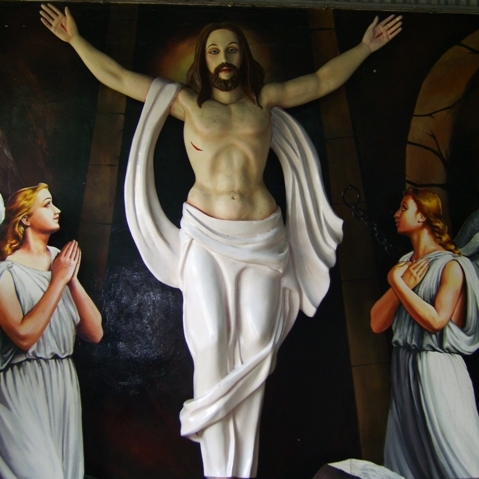
Ultimately, the greatest proof of his divinity is his death and resurrection. He said, “Whoever believes in me will have eternal life. My flesh is real food and my blood is real drink.” His death on the cross and his resurrection are the foundation of New Testament faith.


Importantly, Jesus did not write the Bible himself. He was the living Word. His disciples heard, saw, and touched him. They lived with him and continued his mission through the Eucharist and their communal life. The written Gospels came later—born out of this lived experience.


In the early Church, Christians were persecuted. Many became martyrs. Yet the message of Jesus spread—first orally, then gradually written down. Paul, for example, found people in Athens worshipping an “unknown god.” He told them this unknown god is now revealed in Jesus Christ, and many came to believe.


Communities formed in Jerusalem, Rome, Athens, Corinth, Philippi, Antioch, and throughout modern-day Iraq, Iran, Turkey, and Greece. As time passed, there was a need to record the teachings of Jesus, which led to the writing of the Gospels. Matthew, being educated, authored one of the earliest. Luke and Mark were disciples of the apostles, while John, a direct apostle, wrote much later, possibly in the 90s AD.


So we see: the lived Gospel came before the written Gospel. Jesus said, “You are my disciples if you love one another.” The first Christians lived this message, and the Bible we now have is the fruit of that life. The Gospels, letters of Paul, John, Peter, James, Hebrews, Revelation, and Acts of the Apostles are all the legacy of this vibrant, living community.


The New Testament, then, is not just a set of documents—it is the heritage of a community that lived in communion with God and with one another. This is why the Bible is not a dead book. It is the testimony of life, of faith, of love.


To read the Bible properly, one must have the right attitude—an attitude of simple faith and love. If we listen with prejudice or pride, we will not truly hear. Understanding the Bible is not just about academic study; it is about listening with the heart. Jesus is not just a historical figure; he is a living person. He speaks to us through the Scriptures.


Experts may study the Bible analytically and historically, but more important is reading the Bible with the heart of a child—seeking to understand what God wants to say to you today. The Bible is God's love letter. When we read it with faith, love, and openness, we grow in intimacy with God. That’s the ultimate goal: to know Him more deeply, love Him more dearly, and follow Him more closely.         - By Dr.Rev.Fr.V.Ignatius SJ